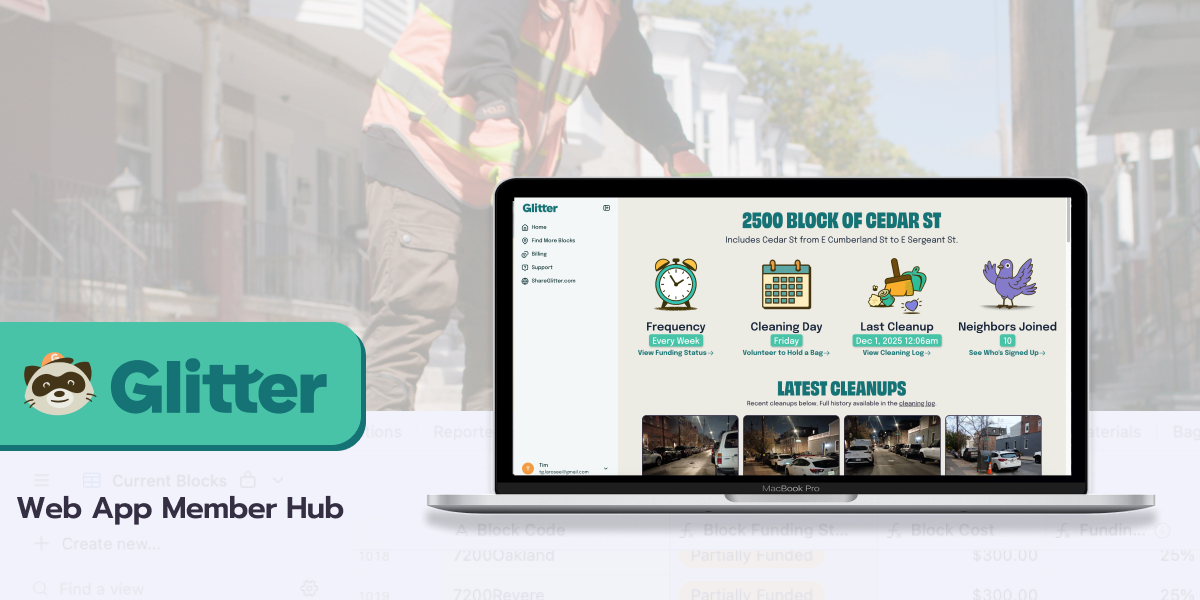
Glitter
A web app member hub for user and city block data for real-time insights and user interaction, dynamically powered by a single source of truth database.
Role
Product Manager
Timeline
April 2024 – September 2025
Team
Product Manager/Designer, CEO, Founder
Glitter is a social impact cleaning service based in Philadelphia. They facilitate neighbor-funded cleanups for their city blocks, hiring and paying a living wage to cleaners who often have barriers to work. This case study provides an abbreviated overview of the designing the web app member hub.
Key Outcomes
Created a single source of truth for data across 1,000+ users and city blocks
Launched a dynamic, on-brand web app member hub with real-time visibility
Streamlined subscriptions and eliminated multi step manual workflows
Built scalable foundation for future grant-funded initiative work
How could Glitter design an accessible, on-brand experience for users that could be built on top of and in step with Airtable data? As a lean startup, Glitter needed a tool that was: cost effective without the need for custom development, could be managed entirely in-house, and provided an out of the box solution without a steep learning curve. After considering multiple options, Softr proved to be the best solution.
Design Strategy
Clear, accessible UX for users with varying technical abilities
Balance visual design with robust data logic
Conditional visibility based on permissions and status
Maintain brand consistency across all touchpoints

Created initial user flows and wireframes in Figma to map the user journey
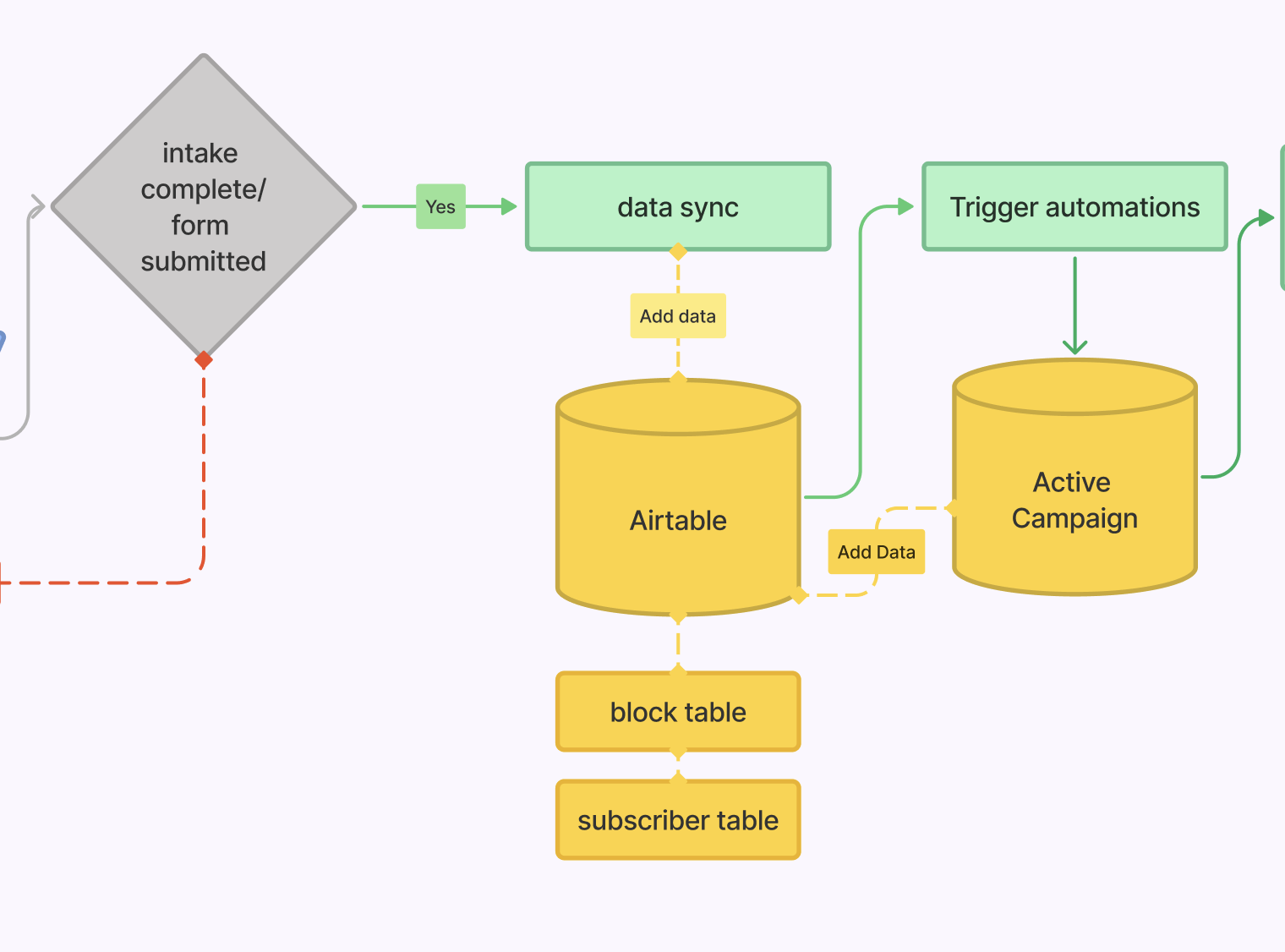
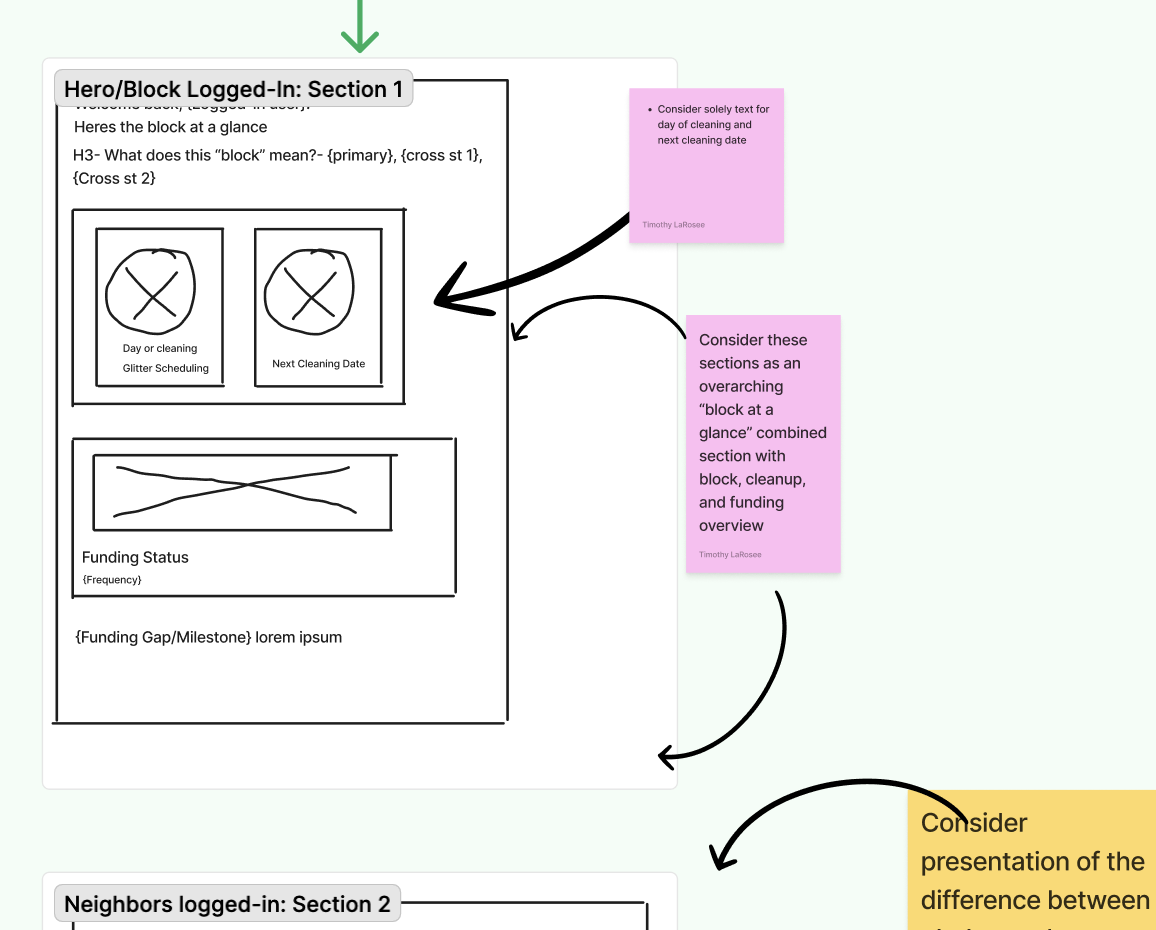

Transitioned Figma prototypes into Softr's editor, iterating on design to accommodate functionality and data considerations
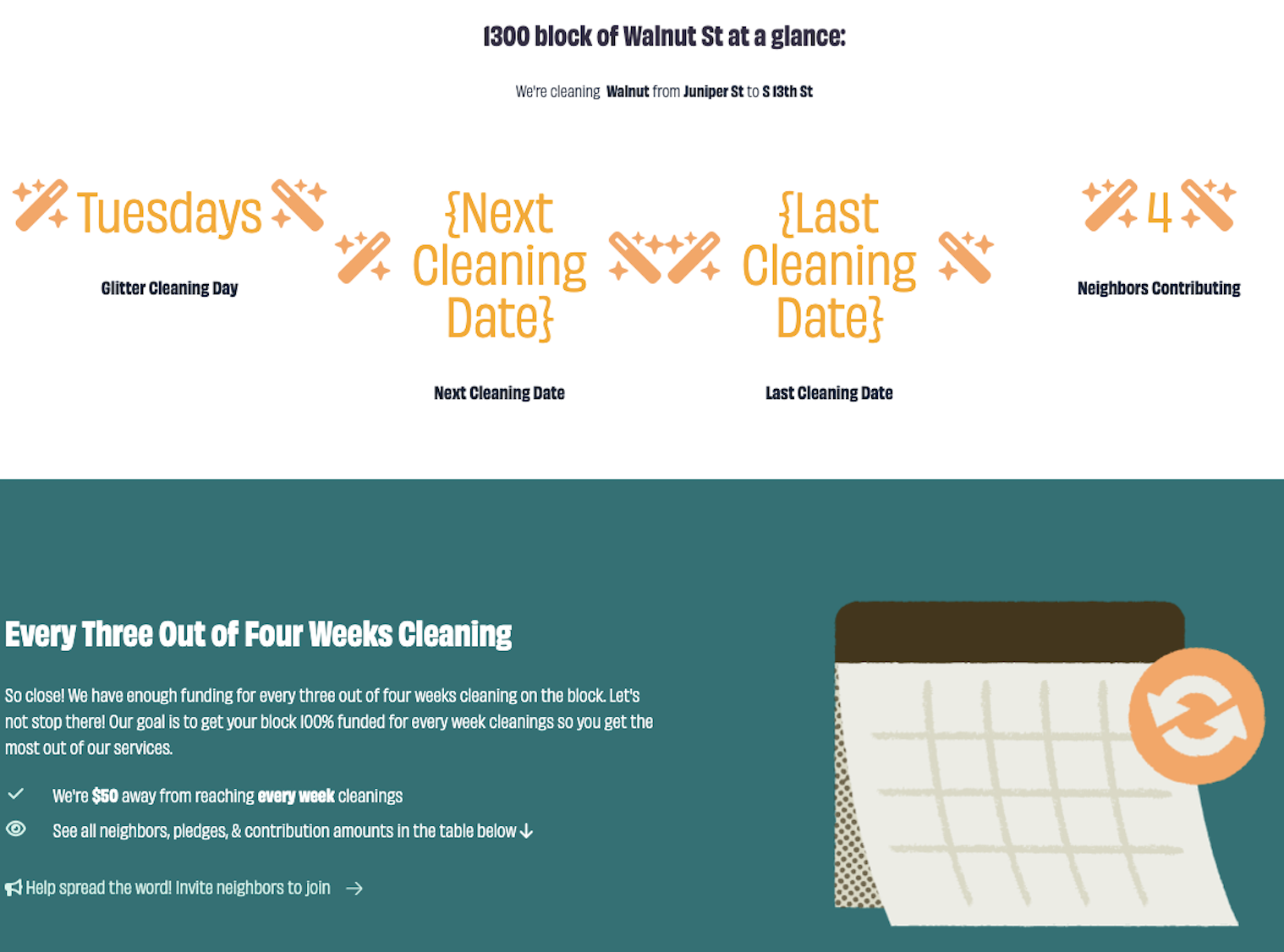


Designed polished dynamic and static templatized mockups that would scale to 1,000+ city blocks in Glitter’s database

Extended Softr's out-of-the-box capabilities with custom HTML/CSS and window.record lookups
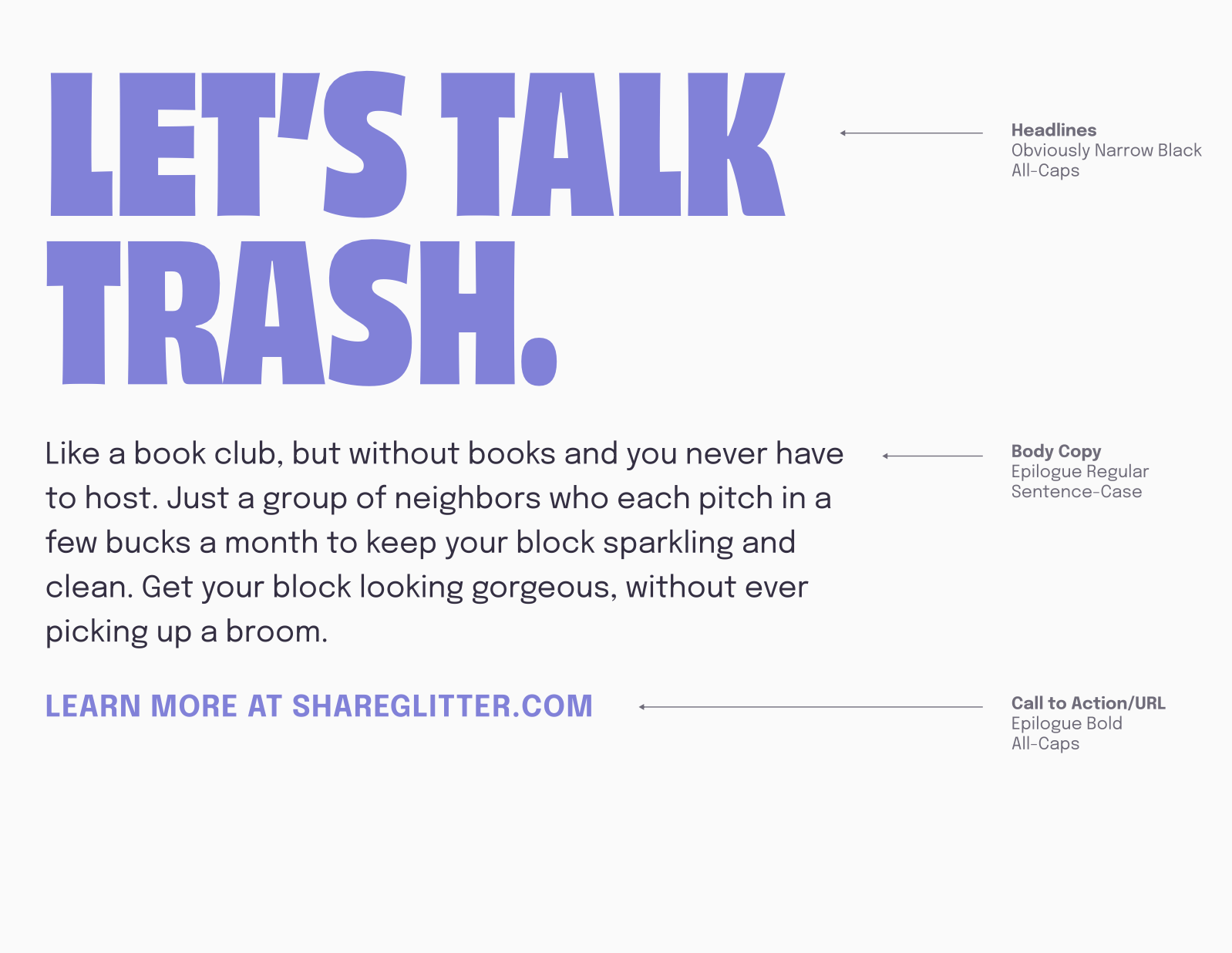
Glitter already had an established brand guide, created by Smith & Diction. Designing the web app required working within Softr’s native static and dynamic div block structures while incorporating custom elements such as Adobe Fonts. The goal was to deliver a seamless, cohesive brand experience across the web app.

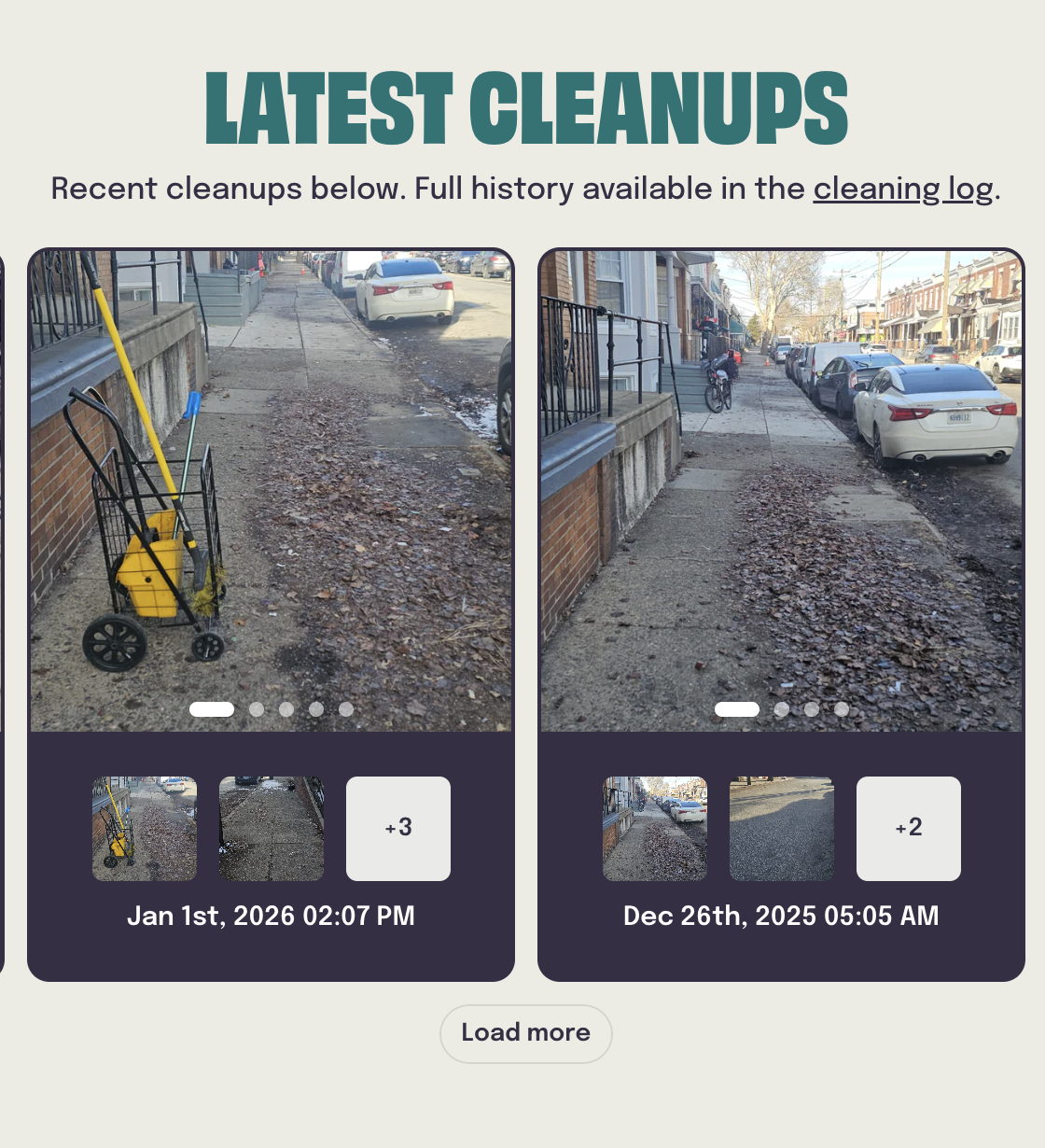
Previously, Glitter relied on a manual, time-consuming workflow that made scaling difficult. Each new city block or user required hand-creating fundraising pages, uploading images, and manually adjusting contribution amounts, slowing onboarding and limiting visibility for end users.
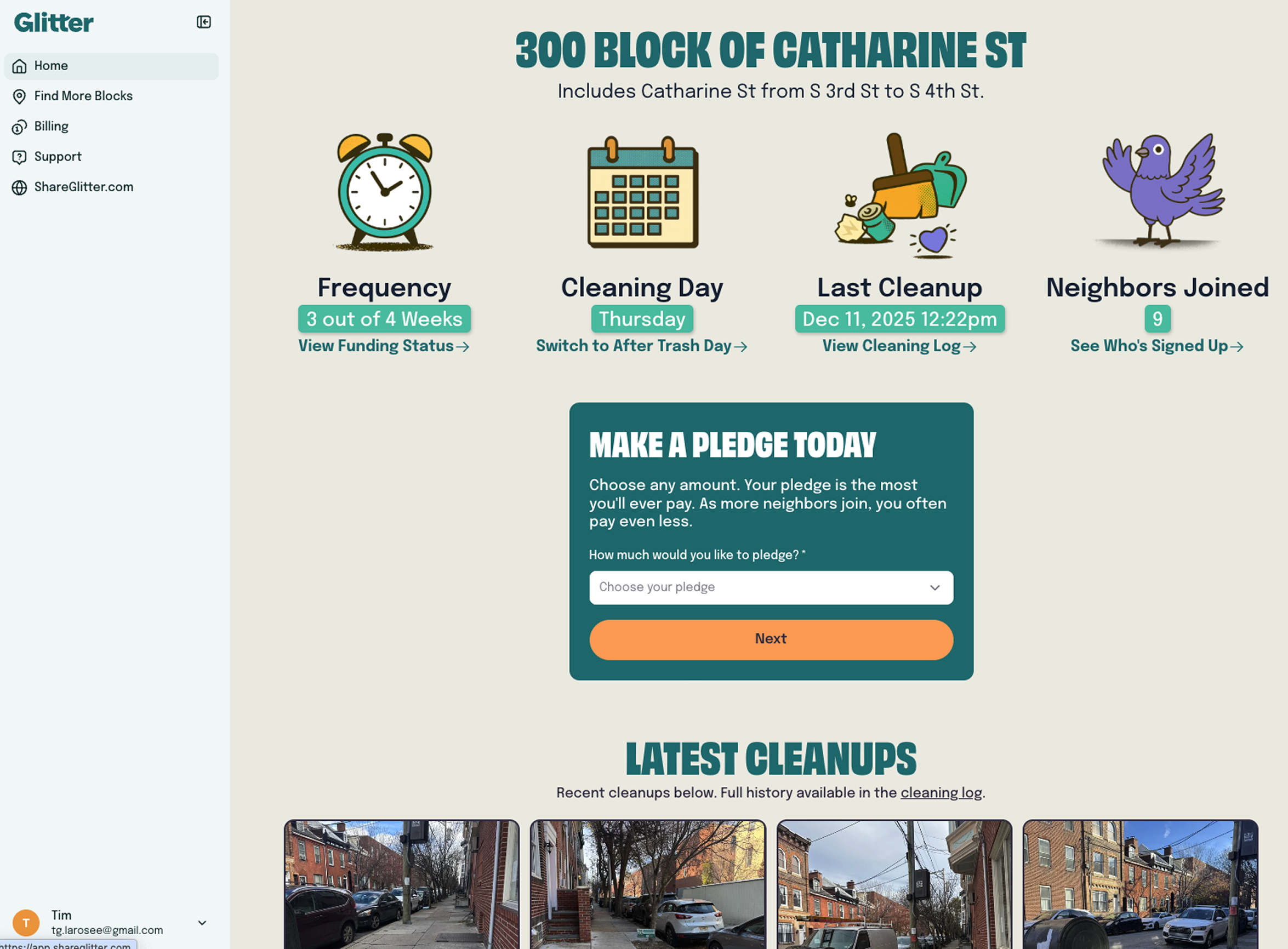
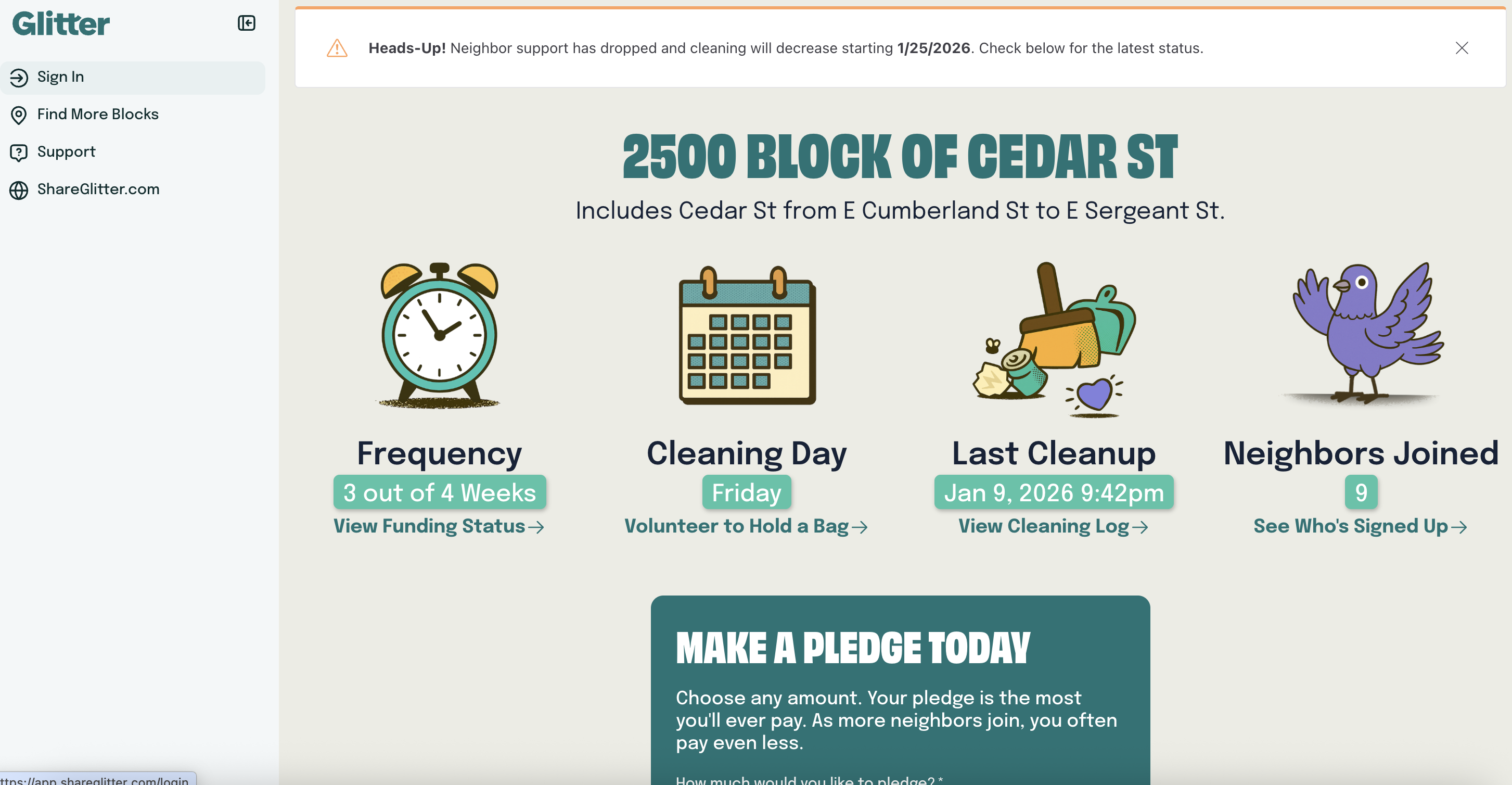
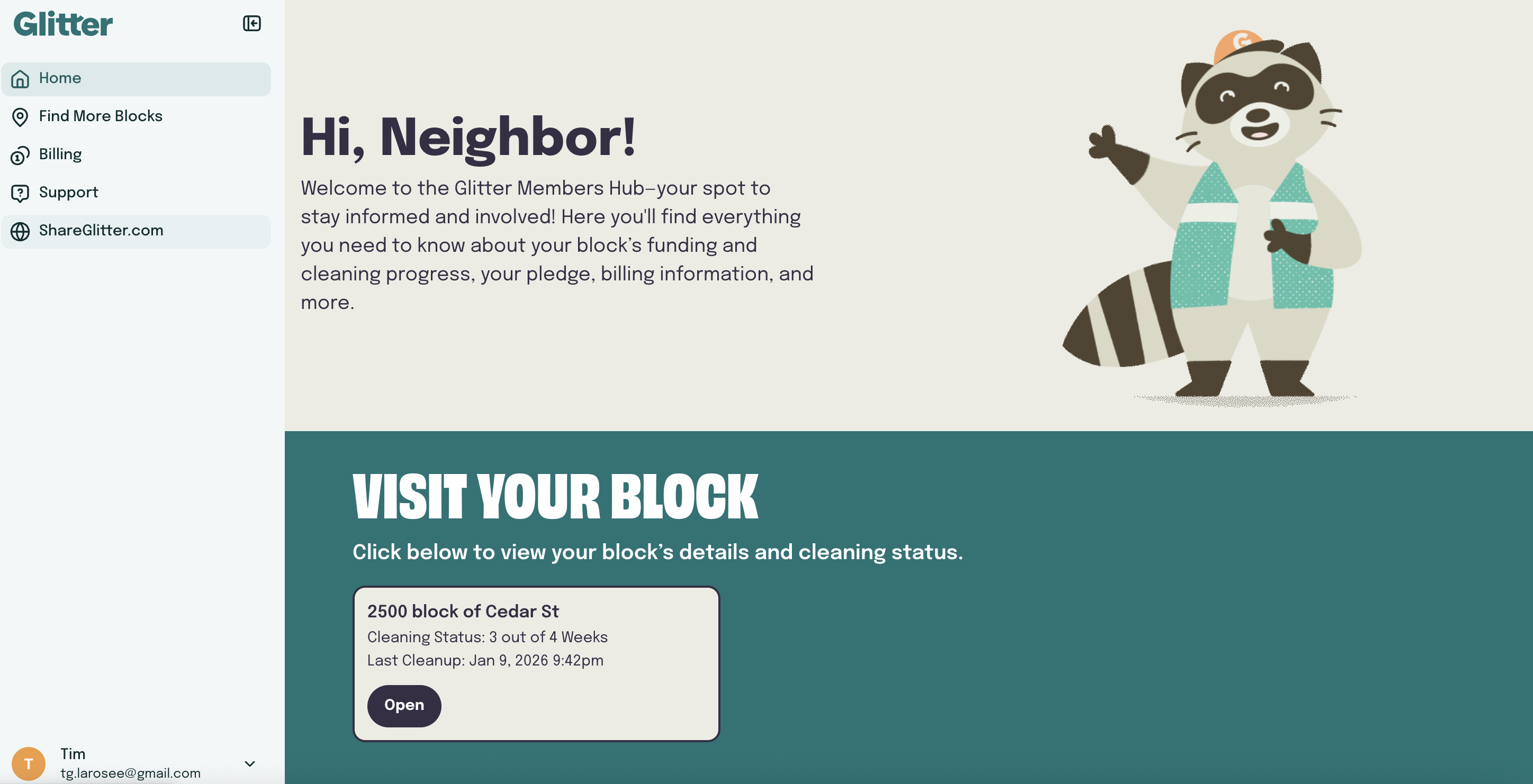
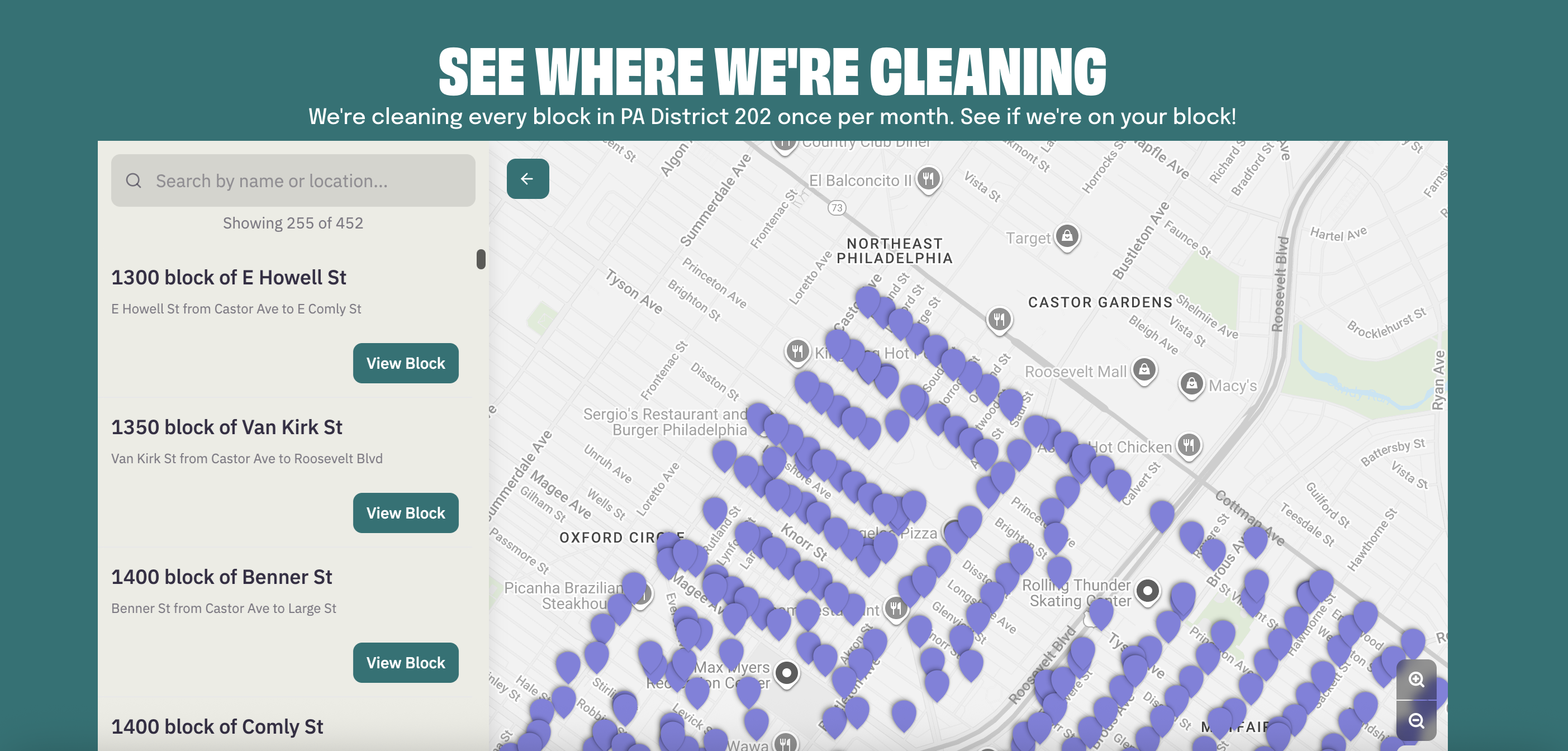
We designed a scalable page template that dynamically pulls data across 1,000+ city blocks in Glitter's database, conditionally displaying block details, funding contributions, and cleaning status to improve transparency and accelerate onboarding.
Before: Static Pledge Pages
Manual updates required for each block, no real-time data

After: Dynamic Page Templates
Real-time data, conditional visibility, permission-based access
This work was shaped through close collaboration with internal stakeholders, operations, and external stakeholder partners. Input from cleaners, user interviews, and the Softr team directly informed design decisions, ensuring the solution worked in real-world workflows, not just in theory.
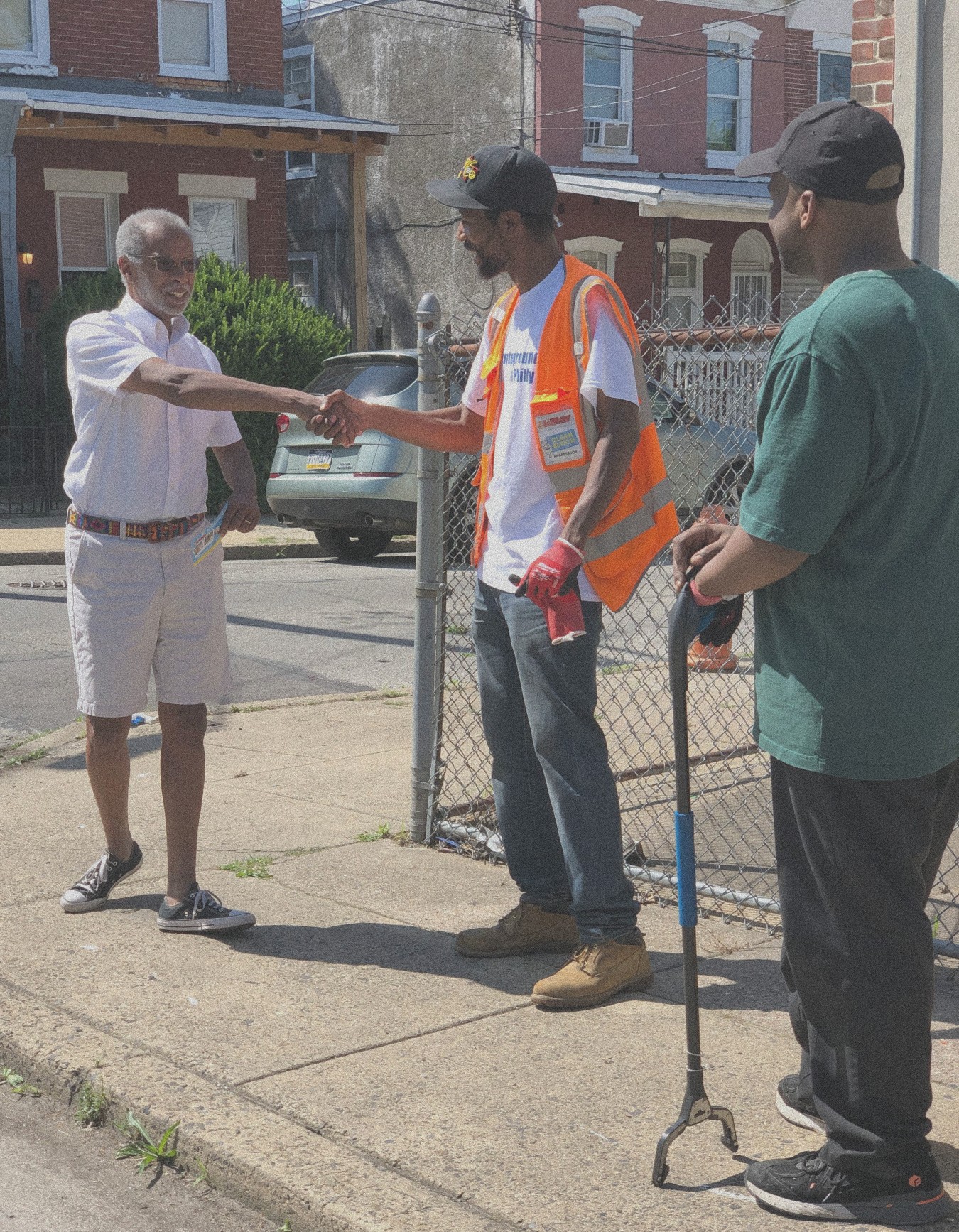

Partnered closely with leadership to align on vision, goals, and constraints. Through ongoing prioritization and trade-offs, design decisions balanced business needs with scalability and long-term maintainability.

Collaborated with operations and cleaners to understand on-the-ground workflows and constraints. Their input surfaced edge cases and operational realities that directly shaped data visibility, content hierarchy, and system design.

Facilitated user interviews with leadership and synthesized insights to surface trust signals, clarity gaps, and onboarding friction. Research findings and ongoing feedback informed product and design decisions, balancing user needs with technical and data constraints.

Worked directly with the Softr team to navigate platform constraints and capabilities. These discussions shaped implementation decisions around dynamic data, templates, and custom code integrations to ensure scalability and a consistent product experience.
It paid off to build a strong relationship with the Softr team that went beyond customer success and engineering and into marketing. Together, we shipped a product they were proud to showcase—resulting in Softr’s first in-person, video-documented customer case study for their customer story series.